A beautifully finished wall often looks simple, but achieving that smooth surface requires careful preparation, controlled application, and consistent technique. The joints between drywall panels must be reinforced and concealed before painting or decorating begins.
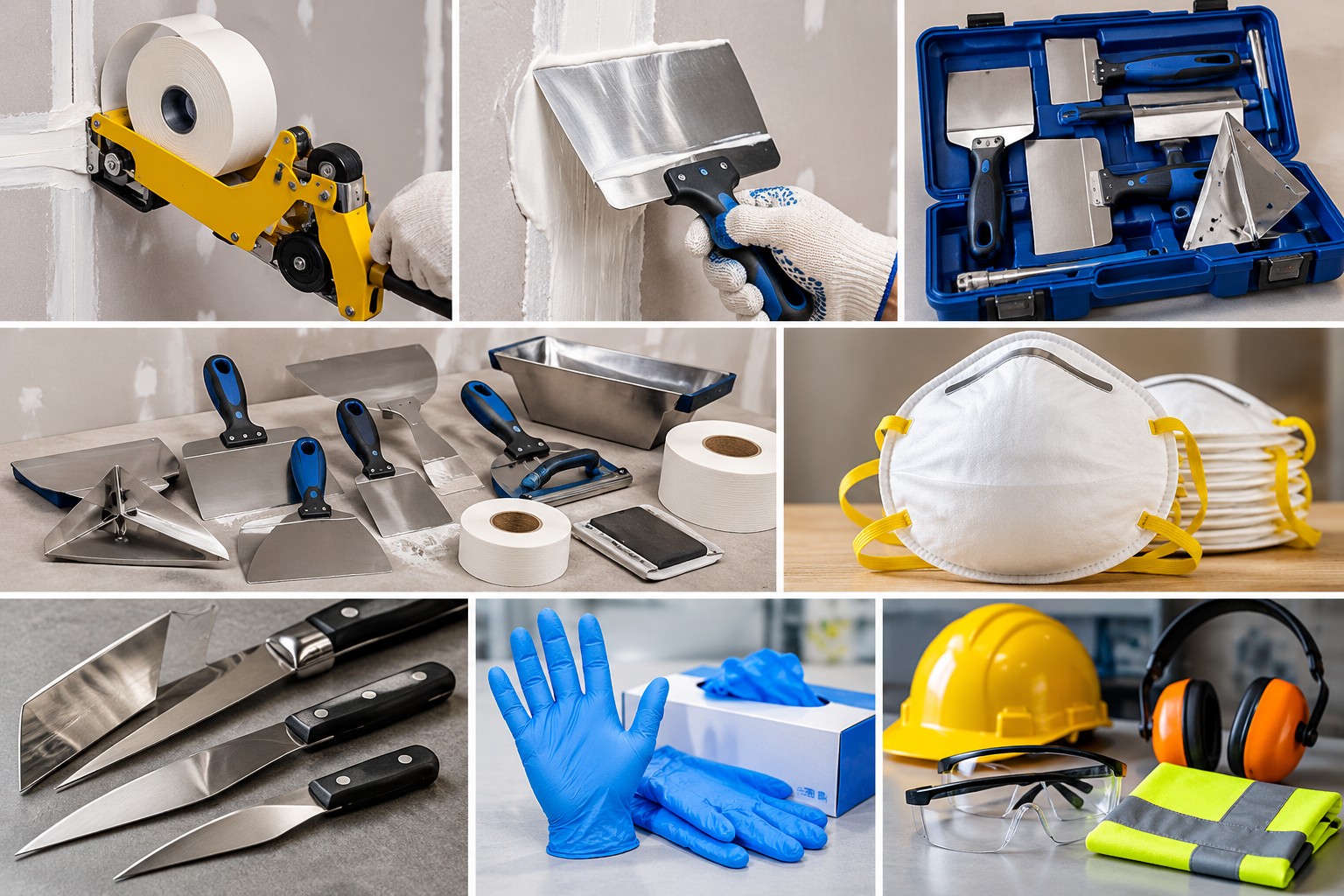
Choosing appropriate drywall taping tools can make this process more efficient while helping achieve a uniform finish.
Whether completing a small renovation or working on a larger construction project, understanding how different tools function allows workers to approach drywall finishing with greater confidence.
Understanding the Drywall Taping Process
Drywall panels create the foundation of many interior walls and ceilings. However, the seams between panels remain visible until they are properly treated.
Joint compound and reinforcing tape work together to strengthen these connections and create a continuous surface.
The process generally includes applying compound, embedding tape, adding finishing coats, and sanding imperfections.
Each stage requires attention to detail.
Essential Drywall Taping Tools for Different Tasks
No single tool performs every finishing operation effectively. Different designs support compound application, tape placement, smoothing, and detailed corner work.
Taping Knives for Compound Application
Taping knives spread joint compound across seams, fasteners, and surface imperfections.
Narrow blades help with smaller areas, while wider blades support feathering and finishing.
A flexible blade can help produce smooth transitions between compound and surrounding drywall.
Mud Pans for Material Handling
A mud pan keeps joint compound accessible during application.
Its straight edges also allow workers to remove excess compound from a blade, helping maintain consistent material control.
Keeping the pan clean prevents dried particles from entering fresh compound.
Corner Finishing Equipment
Inside corners require particular care because two surfaces meet at an angle.
Specialized corner equipment helps distribute compound evenly and shape clean transitions.
Consistent pressure and correct positioning are essential for avoiding excess material buildup.
Manual Versus Automatic Drywall Taping Tools
Drywall finishing can involve traditional hand tools, automatic equipment, or a combination of both.
The most appropriate approach depends on project size, worker experience, and finishing requirements.
Benefits of Manual Application
Manual drywall taping tools provide direct control over material placement.
They are particularly useful for repairs, small rooms, unusual surfaces, and detailed finishing work.
Workers can adjust pressure and blade position according to the condition of each joint.
Advantages of Automatic Equipment
Automatic systems help apply tape and compound more consistently across repeated joints.
They may reduce repetitive movements on larger projects when operated correctly.
However, automatic equipment requires proper setup, cleaning, and technique to deliver reliable results.
Techniques That Improve Drywall Finishing
Professional-looking results depend on both equipment and application methods.
Apply Compound in Controlled Layers
Applying excessive compound often creates unnecessary sanding and uneven surfaces.
Thin, controlled coats are generally easier to manage.
Allow each layer to dry according to the compound instructions before proceeding.
Maintain Consistent Blade Pressure
Uneven pressure can leave ridges, grooves, or visible transitions.
Holding the blade at a controlled angle helps spread compound smoothly.
Practice on smaller sections can improve consistency before tackling larger areas.
Inspect Surfaces Between Coats
Lighting can reveal imperfections that remain difficult to see under normal conditions.
Check for raised edges, depressions, bubbles, and uneven feathering.
Correcting problems early reduces additional work during final finishing.
Maintaining Drywall Taping Tools
Proper maintenance supports performance and extends usable equipment life.
Remove remaining compound immediately after use, following the cleaning instructions for each tool.
Avoid allowing hardened material to accumulate around blades, moving parts, or internal mechanisms.
Inspect metal edges for damage and store equipment where it will remain protected from impacts.
Organizing Equipment for Better Workflow
Keeping frequently used tools accessible reduces interruptions.
Arrange equipment according to the order of application, finishing, and cleanup.
A clean working area also limits contamination and helps maintain consistent compound quality.
Conclusion
Selecting suitable drywall taping tools is an important part of producing clean, durable wall finishes. Each tool contributes to a specific stage, from embedding tape to feathering the final coat.
With careful preparation, appropriate application techniques, and regular equipment maintenance, drywall finishing becomes more predictable and efficient.
Consistent workmanship ultimately matters more than rushing through the process.