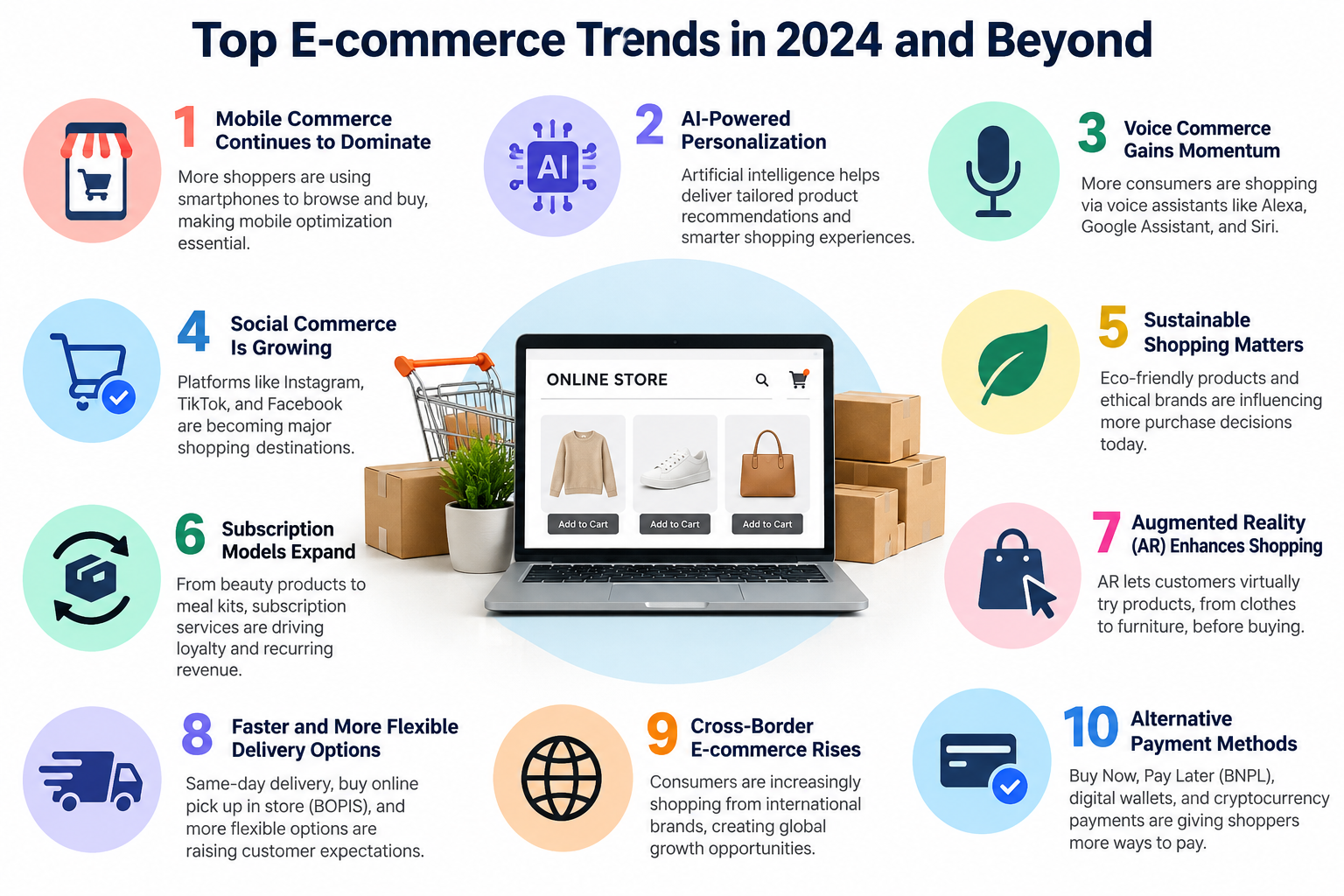
Online shopping has transformed how consumers discover, compare, and purchase products. Businesses now reach customers across borders without depending entirely on traditional retail channels. As digital commerce continues evolving, understanding ecommerce trends is essential for identifying changing customer expectations, improving delivery experiences, and preparing for international expansion.
Today’s online marketplace is influenced by mobile shopping, personalized experiences, cross-border transactions, and increasingly demanding delivery expectations. These developments are changing how businesses organize their operations.
The Evolution of Global Ecommerce
Digital commerce has progressed from simple online storefronts to interconnected shopping experiences involving multiple devices and sales channels.
Consumers increasingly expect convenient browsing, transparent product information, and reliable order fulfillment.
Businesses must therefore look beyond website performance and consider the entire purchasing journey.
Why Ecommerce Trends Matter
Monitoring ecommerce trends helps businesses recognize emerging consumer preferences before they become standard expectations.
It also provides insights into inventory planning, international shipping, customer communication, and operational efficiency.
Organizations that adapt early can improve customer experiences while avoiding unnecessary operational disruptions.
Mobile Shopping Continues to Influence Consumer Behavior
Mobile devices play a central role in modern purchasing decisions.
Customers frequently browse products, compare alternatives, and complete purchases using smartphones.
Creating Better Mobile Experiences
Successful mobile shopping experiences depend on straightforward navigation, readable product descriptions, and convenient checkout processes.
Complicated forms and slow-loading pages can discourage purchases.
Businesses should regularly evaluate mobile usability to identify unnecessary friction.
Cross-Border Shopping Creates New Opportunities
International online shopping allows consumers to access merchandise beyond their domestic markets.
For businesses, this creates opportunities to reach new audiences and diversify revenue sources.
However, international expansion introduces additional responsibilities.
Managing International Shipping Expectations
Cross-border customers often want clear information about delivery times, customs requirements, and potential import charges.
Unexpected costs or shipment delays can damage trust.
Businesses should communicate relevant shipping conditions before customers complete purchases.
Accurate product descriptions and organized shipment records also support smoother international fulfillment.
Personalization Is Changing Online Shopping
Consumers increasingly encounter shopping experiences tailored to their browsing activity and preferences.
Personalized product discovery can make online stores easier to navigate.
However, businesses must balance relevance with responsible data practices.
Building Customer Trust
Transparent privacy policies and appropriate information handling contribute to stronger customer relationships.
Businesses should collect only information needed for legitimate operational purposes and follow applicable privacy requirements.
Trust remains a significant factor in long-term customer retention.
Faster Fulfillment Is Becoming a Competitive Priority
Delivery reliability strongly influences customer satisfaction.
Consumers want accurate estimated delivery dates and timely shipment updates.
Businesses must coordinate inventory availability, order processing, transportation, and customs documentation.
Improving Fulfillment Efficiency
Well-organized inventory records help prevent overselling and unnecessary delays.
Accurate shipment data can also reduce processing problems when orders cross international borders.
Businesses exploring global expansion may benefit from reviewing cross-border ecommerce guidance to understand the relationship between fulfillment and regulatory responsibilities.
Sustainability Influences Purchasing Decisions
Environmental considerations increasingly shape conversations about packaging, transportation, and product sourcing.
Some consumers prefer businesses that communicate practical sustainability efforts.
Companies can evaluate packaging materials, shipment consolidation, and inventory efficiency to identify opportunities for reducing waste.
Claims about environmental benefits should remain accurate and supported by evidence.
Emerging Ecommerce Trends to Watch
Several developments are likely to influence future online shopping experiences.
Greater Operational Automation
Automation can reduce repetitive tasks involving order processing, inventory updates, and shipment information.
Businesses should still maintain human oversight for exceptions and regulatory decisions.
More Connected Shopping Channels
Customers may discover products through social platforms, marketplaces, and independent online stores.
Consistent information across channels helps prevent confusion.
Stronger International Compliance Expectations
Cross-border sellers must account for customs classification, product restrictions, and changing import requirements.
Accurate information becomes increasingly important as shipment volumes grow.
Conclusion
Ecommerce trends reveal how digital shopping is evolving beyond simple online transactions. Mobile convenience, international purchasing, personalized experiences, fulfillment reliability, and responsible business practices are shaping customer expectations.
Businesses that monitor these changes and adapt their operations thoughtfully can create more reliable shopping experiences and prepare for sustainable international growth.