Fire detection systems play a critical role in protecting building occupants and supporting emergency response.
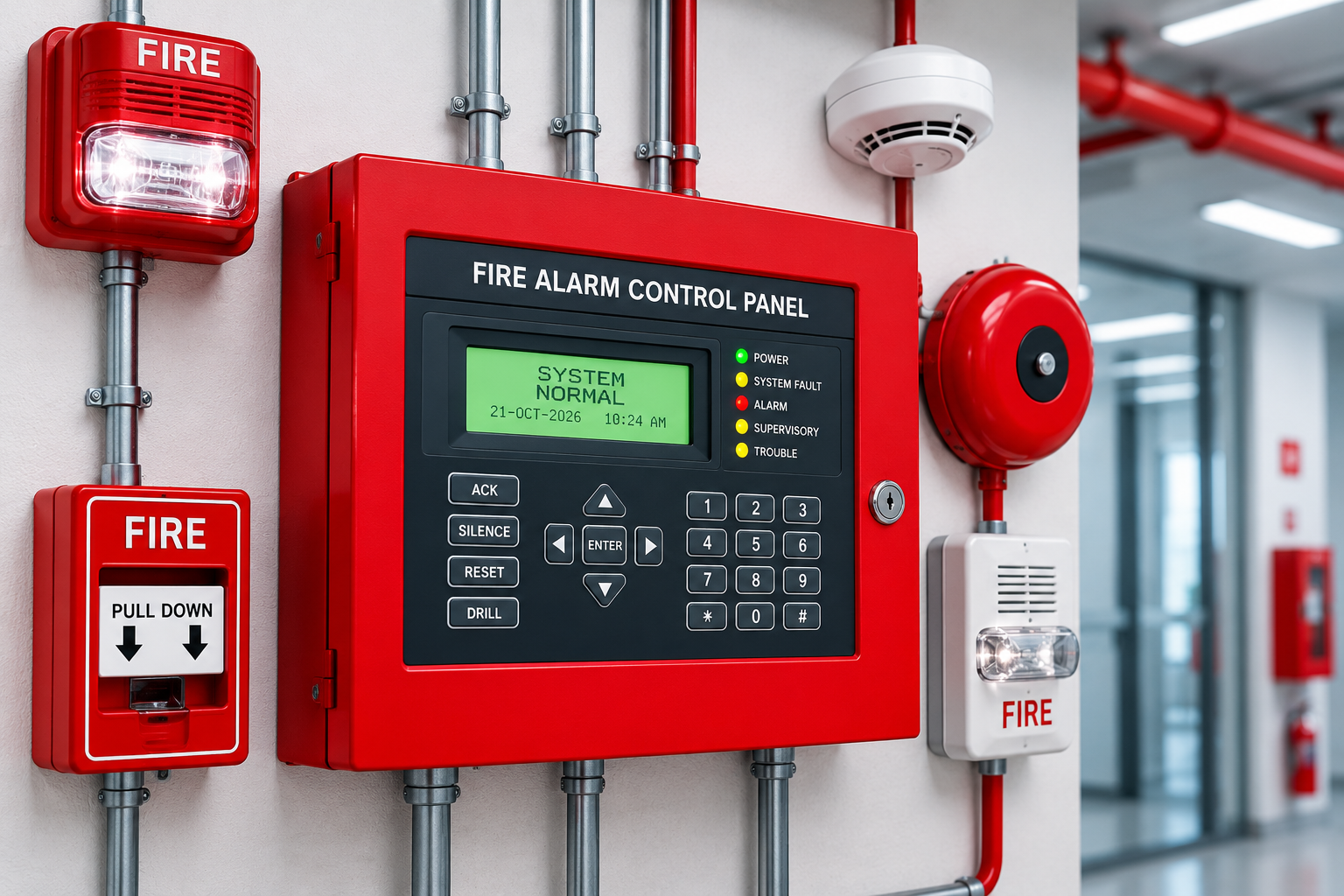
At the centre of many building fire alarm systems is a control panel that receives signals, monitors connected devices, and coordinates alarm functions.
Proper fire alarm control panel installation requires careful planning, suitable equipment selection, and compliance with applicable fire and electrical regulations.
Understanding the installation process helps property owners and facility managers make informed decisions about building safety.
Understanding the Role of a Fire Alarm Control Panel
A fire alarm control panel acts as the central monitoring and control component of a fire alarm system.
It receives information from connected initiating devices and manages system responses according to its configuration.
These responses may include activating notification appliances, displaying fault conditions, and transmitting signals to monitoring arrangements where required.
Monitoring Fire Detection Devices
Depending on the system design, connected devices may include smoke detectors, heat detectors, manual alarm stations, and other approved initiating equipment.
The panel interprets incoming signals and identifies relevant alarm or trouble conditions.
Coordinating Emergency Notifications
When an alarm condition occurs, the panel can activate connected audible and visual notification devices.
Some systems also interface with other building safety functions.
These connections must be designed and configured according to the applicable requirements.
Planning Before Installation Begins
Successful fire alarm control panel installation starts well before equipment is mounted.
Reviewing Building Characteristics
Building occupancy, size, layout, and applicable code requirements influence system design.
Different properties may require different detection zones, notification arrangements, and monitoring functions.
An appropriate design should reflect the actual building rather than relying on a generic configuration.
Selecting a Suitable Panel Location
The control panel should be installed in an approved, accessible location.
Accessibility supports inspection, maintenance, emergency response, and system operation.
Environmental conditions and physical protection should also be considered.
Confirming Power Requirements
Fire alarm control equipment typically requires suitable primary and secondary power arrangements.
Backup power capacity must meet the applicable system and regulatory requirements.
These provisions help maintain required functions during interruptions to normal electrical power.
Key Stages of the Installation Process
Mounting and Wiring
Qualified personnel install the panel and connect the approved circuits and associated equipment.
Wiring must follow the system design, manufacturer instructions, and applicable installation standards.
Correct identification and organization of circuits simplify troubleshooting and future maintenance.
Configuration and Programming
After electrical connections are complete, the panel must be configured for the intended building arrangement.
Programming may involve device identification, alarm zones, notification sequences, supervisory conditions, and approved interfaces.
Incorrect configuration can affect how the system responds during an emergency.
Testing and Verification
Testing is one of the most important stages of fire alarm control panel installation.
Qualified personnel verify that connected devices, notification functions, power supplies, and relevant interfaces operate as designed.
Required records and documentation should be completed before the system is accepted for use.
Common Installation Problems to Prevent
Poor planning can lead to inaccessible equipment, unsuitable wiring routes, or inadequate system coordination.
Other problems include incorrect device identification, incomplete documentation, and insufficient verification.
These issues can complicate maintenance and potentially affect system performance.
A properly designed installation process addresses such concerns before the system becomes operational.
Maintenance After Installation
Installation is only the beginning of the system’s operational life.
Regular inspection, testing, and maintenance are necessary to identify faults and confirm continued performance.
Property managers should maintain accurate documentation of inspections, repairs, modifications, and system events.
Changes to building layouts or occupancy may also require the fire alarm system to be reassessed.
Finding Qualified Installation Professionals
Fire alarm systems involve specialized life-safety requirements.
Property owners should verify that the individuals responsible for design, installation, verification, and maintenance hold the qualifications required in their jurisdiction.
Researching a local fire alarm installation location may help identify an initial point of contact.
Conclusion
Reliable fire detection depends on more than installing individual devices.
The control panel must be properly selected, located, connected, configured, and verified.
Professional fire alarm control panel installation supports coordinated system operation and helps buildings meet applicable life-safety requirements.
With careful planning and ongoing maintenance, building owners can establish a dependable foundation for fire detection and emergency notification.