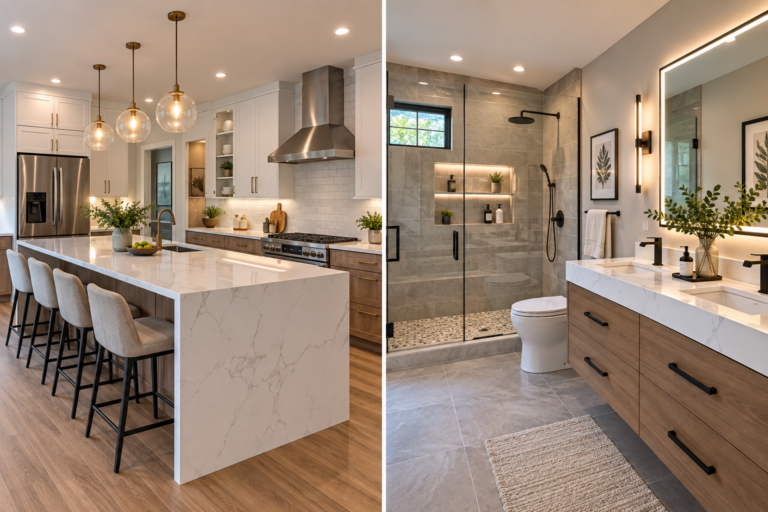
Every home tells a story through its interior spaces. The kitchen supports daily routines, the living room welcomes family gatherings, and bedrooms provide a quieter place to relax.
Flooring connects these spaces visually and functionally.
Working with residential flooring specialists can help homeowners understand which materials are appropriate for different rooms, how installation conditions affect performance, and what maintenance each surface requires.
Rather than selecting flooring based on appearance alone, homeowners can take a more practical approach to the entire renovation.
Why Different Rooms Need Different Flooring
A single flooring material does not necessarily perform equally well throughout a home.
Moisture exposure, foot traffic, furniture movement, and comfort expectations vary considerably.
Living Rooms
Living areas often benefit from flooring that balances appearance, durability, and ease of cleaning.
Hardwood, laminate, vinyl, and carpet may all be suitable depending on household preferences.
Kitchens
Kitchen flooring should accommodate frequent movement and occasional spills.
Tile and compatible resilient flooring are commonly considered because of their practical cleaning characteristics.
Bedrooms
Comfort, warmth, and acoustic performance may be particularly important in bedrooms.
Carpet can create a soft surface, while hard flooring combined with suitable furnishings offers a different aesthetic.
The Importance of Understanding Flooring Materials
Residential flooring specialists can explain the characteristics of commonly used materials.
Hardwood Flooring
Hardwood provides a natural appearance and can offer long-term usefulness when installed and maintained appropriately.
However, it responds to moisture and humidity changes.
Laminate Flooring
Laminate offers decorative versatility and is available in many wood-inspired designs.
Its moisture resistance and durability depend on the specific construction.
Luxury Vinyl Flooring
Vinyl flooring can provide a resilient surface with varied visual finishes.
Subfloor preparation and installation compatibility remain important.
Carpet Flooring
Carpet offers softness and may contribute to acoustic comfort.
Fiber construction, pile style, and maintenance needs should be considered before selection.
Why Installation Planning Matters
Even suitable flooring can develop problems when installed over an improperly prepared surface.
Uneven subfloors, unresolved moisture issues, and incorrect expansion clearances can affect performance.
Residential flooring specialists should consider these conditions before recommending installation methods.
Subfloor Inspection
An inspection helps identify surface irregularities, structural concerns, and potential moisture problems.
Material Compatibility
The flooring must suit the substrate, room conditions, and any existing heating system.
Finishing Details
Transitions, baseboards, door clearances, and room edges affect both appearance and function.
Creating a Consistent Interior Design
Homeowners often want flooring that feels connected across multiple rooms.
Using related tones or complementary textures can create visual continuity without requiring identical materials everywhere.
For example, a warm wood-inspired floor in the living area may coordinate with neutral kitchen tiles.
The goal is to create a balanced appearance while respecting each room’s practical requirements.
Questions Worth Asking
Before beginning a renovation, homeowners should clarify the expected installation process.
Ask how the subfloor will be evaluated, whether moisture testing is necessary, and what preparation may be required.
It is also useful to understand cleaning recommendations and environmental limitations.
Clear answers help establish realistic expectations.
Exploring Flooring Guidance Locally
Homeowners can benefit from discussing their renovation goals with people familiar with residential flooring materials and installation practices.
Reviewing residential flooring options in London, Ontario may help identify suitable directions for a planned project.
Conclusion
Residential flooring specialists can help homeowners connect design preferences with the practical requirements of everyday living. Each room presents different challenges, making material selection and installation preparation essential parts of the renovation process. By considering moisture exposure, comfort, durability, and maintenance, homeowners can develop a coordinated flooring plan. Thoughtful decisions create interiors that look welcoming, function effectively, and continue meeting household needs as routines and living spaces evolve.